Job posting
Lead Athletics Groundskeeper at Stanford Stadium | Stanford
Stanford University is hiring a full-time Lead Athletics Groundskeeper for Stanford Stadium and football practice fields, paying $35.71-$43.19 per hour.
Stanford Stadium is a college venue, and that shapes the work more than anything about the building itself. A Cardinal football season is roughly six or seven home dates. An NFL stadium is ten before playoffs; a dual-tenant venue is thirty-plus. If you are looking at Stanford Stadium as an income source rather than an occasional shift, the honest answer is that football alone will not do it — you need the wider Stanford Athletics calendar.
This page covers who hires after Levy took over Cardinal hospitality in 2025, how the college model differs from professional venues, Bay Area pay context, and the venue background.
Levy Restaurants became the hospitality partner for Stanford Athletics starting with the 2025 season, taking on food, beverage, premium service, and event catering across the athletics venues. The partnership is covered here.
| Work | Employer | Application path |
|---|---|---|
| Concessions, premium hospitality, catering | Levy Restaurants | Compass Group careers portal |
| Guest services, ushers, ticket takers | Stanford Athletics | Stanford Athletics / university jobs site |
| Grounds, turf, and facilities | Stanford University | Stanford careers site |
| Event security | Contracted vendor and university public safety | Vendor application |
| Parking and traffic | Stanford transportation contractors | Vendor application |
One structural difference from a professional venue: because the employer of record for some roles is the university rather than a contractor, benefits, background-check requirements, and pay scales vary more between role types here than they would at an NFL stadium where a single operator covers most of the workforce. The lead groundskeeper posting is a good example — it is a year-round university position, not event-day hospitality work.
This is the part that changes the maths for applicants. Levy’s Stanford agreement spans multiple venues, not just the stadium:
Staff who make stadium work viable at Stanford generally work across all of them. Applying with availability limited to football Saturdays makes you a marginal hire; applying with winter and spring availability makes you a useful one.
California’s statewide minimum wage is indexed annually and sits above $16.50 an hour. Bay Area hospitality rates typically run above that floor — the cost of living and the competition for staff from restaurants, corporate dining, and tech campuses see to it. Confirm the current rate in the official listing.
| Role | What it involves | Notes |
|---|---|---|
| Concessions attendant | In-bowl service, cashless POS | Standard entry point; heavy student intake |
| Premium host / club server | Service in premium spaces and The Archway | Gratuity share; service experience expected |
| Bartender | Bar service on game days | California alcohol-server certification required |
| Catering staff | Special events and athletics functions | Work outside the football calendar |
| Line cook / prep | Kitchen production | Fewer positions than at a pro venue |
| Grounds and turf | Natural grass field maintenance | Year-round university employment, not event-day work |
College venues run on student labor, and Stanford is no exception — the schedule fits around classes and the campus is the labor pool. But it would be a mistake to assume that is the only route in. Operators consistently need people the student body cannot supply:
If you are applying from the surrounding Peninsula communities rather than from campus, those are the things to lead with.
Stanford’s move to the Atlantic Coast Conference changed the shape of the football schedule more than the work itself: different visiting opponents, and more early Pacific-time kickoffs arranged around East Coast broadcast windows. Earlier kickoffs pull call times forward, which is worth knowing when you commit to availability.
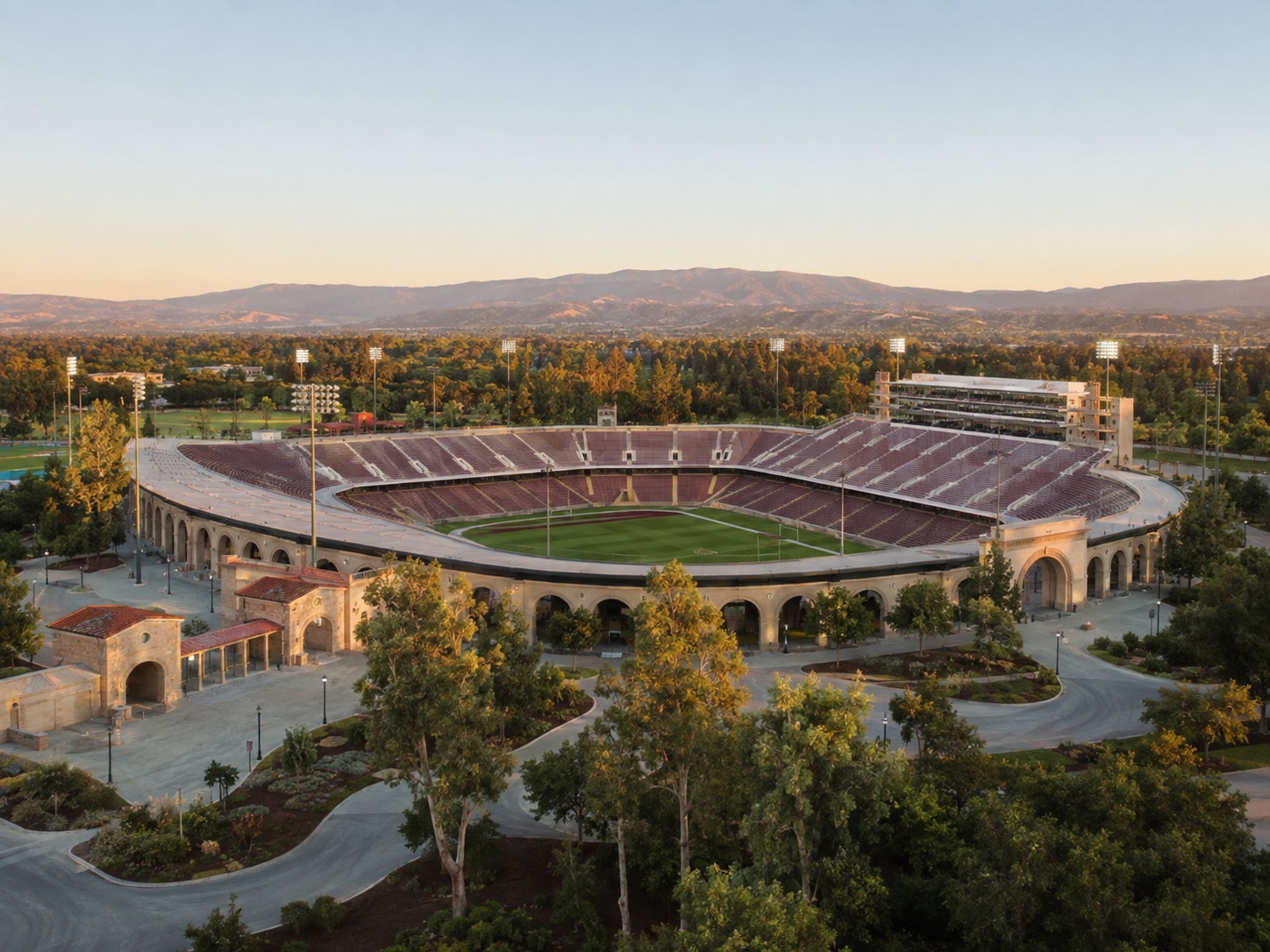
The original Stanford Stadium opened in 1921. The current building is not a renovation of it — the stadium was demolished and rebuilt from the ground up on the same site in 2006, at a cost of roughly $90 million, producing a tighter and more modern bowl at about half the old capacity.
Employment context
Use the venue profile for background, then read the city guide and current postings for role, schedule, and application context.
Job posting
Stanford University is hiring a full-time Lead Athletics Groundskeeper for Stanford Stadium and football practice fields, paying $35.71-$43.19 per hour.
Questions
Levy Restaurants has been the hospitality provider for Stanford Athletics since the 2025 season, covering food, beverage, premium service, and catering at Stanford Stadium, Maples Pavilion, and the softball stadium. Levy hires through the Compass Group careers portal. Stanford Athletics hires directly for guest services and some operations roles, and grounds and facilities positions are university jobs.
No. College venues draw heavily on student labor because the schedule fits around classes, but hospitality operators at Stanford also hire from the surrounding Peninsula communities. Non-student applicants are often more attractive for roles that need weekday availability, alcohol-server certification, or year-round continuity.
Roughly six or seven football home dates in a typical season, which is far fewer than an NFL venue. Anyone relying on stadium income here needs the wider Stanford Athletics calendar — Maples Pavilion basketball through the winter, the softball stadium in spring, plus special events — rather than football alone.
California’s statewide minimum wage is indexed annually and sits above $16.50 an hour, and Bay Area hospitality rates generally run above the state floor because of the cost of living and the competition for staff. Premium and bartending roles pay more once gratuity share is counted. Confirm the current rate in the official listing.
It has changed the schedule more than the job. Stanford’s move to the Atlantic Coast Conference brought a different set of visiting opponents and kickoff windows, including more early Pacific-time starts to suit East Coast broadcast slots. Earlier kickoffs pull call times forward, which is a practical scheduling consideration for staff.